
Your needs, this model
Does it fit your priorities?
Can I fold a long walking deck after work?
Yes. The 47.2 inch belt and folding deck meet those requirements.
Explore this need in the finder →Does it permit a 250 lb load?
Only up to its documented 220 lb limit; 250 lb does not qualify.
Explore this need in the finder →Can automatic control reach a documented 4 mph?
The current C2 lists FootSense within its 1–4 mph specification.
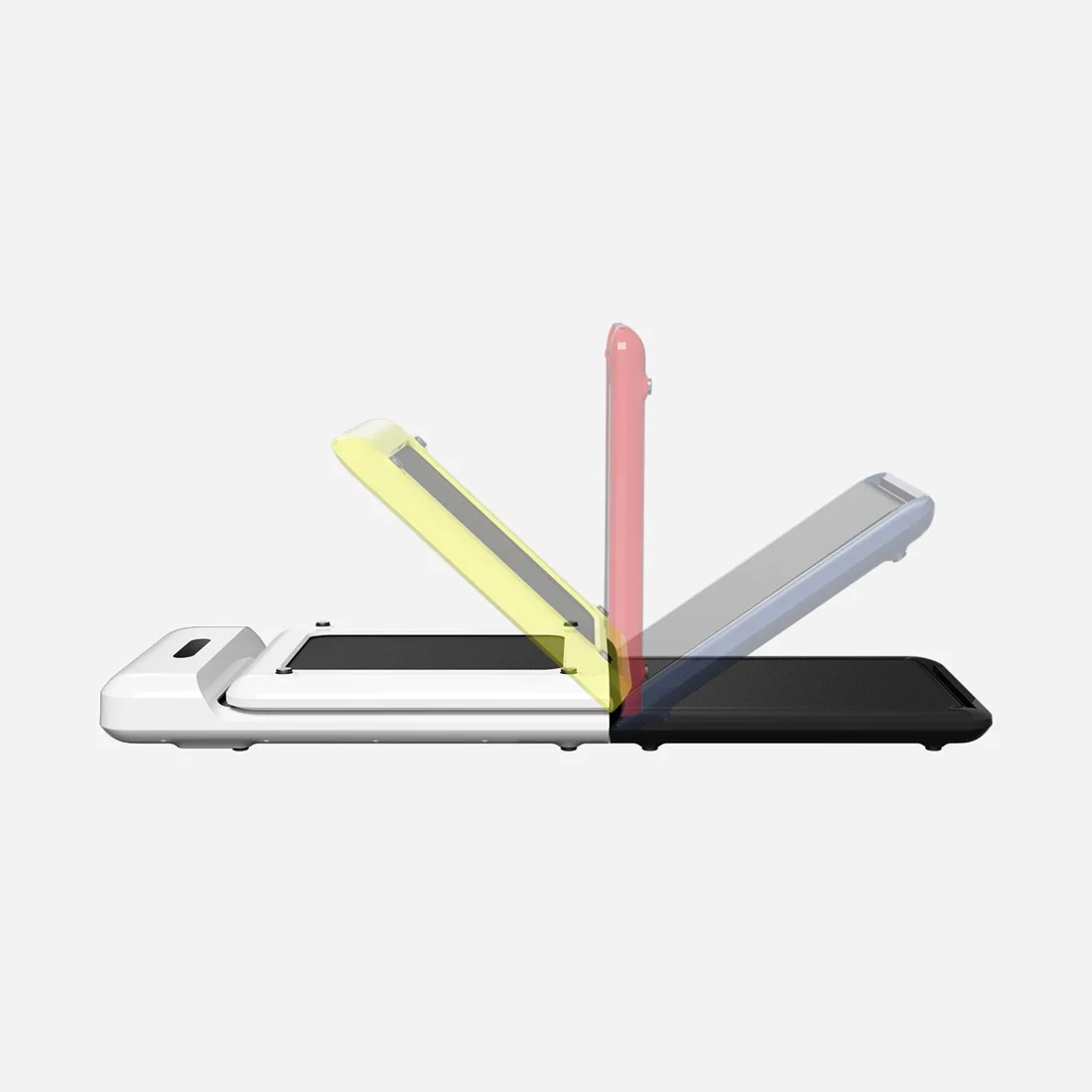
Explore this need in the finder →The WalkingPad C2 makes the strongest case when your office needs to become a sitting workspace again after a walk. Its deck folds across the middle, shortening a long walking surface for storage. The important compromise is a 220 lb capacity and a relatively narrow belt. Choose it around those limits before considering its colors or automatic speed control.
What this C2 actually offers
This assessment covers the US C2 on WalkingPad's current product page. The manufacturer specifies a 47.2 by 15.7 inch walking area, a 1–4 mph speed range and a 220 lb maximum user weight. A treadmill's overall width includes its frame; the 20.4 inch body width is not the width available for your feet. Likewise, the 4 mph upper limit does not make this a running treadmill. WalkingPad explicitly describes the C2 as a walking and brisk-walking machine.
The resulting fit is fairly clear. Someone who wants slow desk walking, remains within the stated capacity and accepts a 15.7 inch belt can put the C2 on a shortlist. Someone who wants a particularly slow start below 1 mph should compare the P1 or A1 Pro. Do not assume that every WalkingPad uses the same minimum speed simply because the decks look related.
A folding deck changes storage, not the space needed to walk
WalkingPad lists the C2 at 56.9 by 20.4 by 4.9 inches open and 32.5 by 20.4 by 5.4 inches folded. That is a useful reduction in storage length, but the folded machine is slightly taller. A sofa gap that clears the open profile may still be too low for the folded package. Measure the actual entry gap, including a rug edge and anything hanging below the furniture.
The stated net weight is 55 lb. Transport wheels help with rolling on a suitable surface, but they do not remove the need to lift or control the machine during a turn, threshold crossing or stair move. Plan its route from the desk to storage before ordering. For an office that needs frequent room-to-room carrying, the shorter Egofit M1 deserves attention, though its shorter belt and fixed incline change the walking experience.
Choose how you want to control the pace
The C2 supports the supplied remote, the KS Fit app and FootSense position-based speed control. Automatic control can sound attractive when your hands are busy, but it is also a different interaction to learn. A change in your position on the belt can become an instruction to the machine. Begin with the manual control method described in your instructions and learn the machine away from a demanding typing task.
A remote is useful even if you like app tracking: it offers a direct control you can keep within easy reach. Decide where it will live on the desk and how you will stop promptly. App compatibility and a bright display cannot establish whether your microphone will pick up footsteps. WalkingPad's noise descriptions are manufacturer claims; this review includes no sound measurements or office call tests.
The desk is part of the purchase
A C2 raises the surface on which you stand. Your desk must reach a comfortable working position from that new height, while its legs, braces and cables leave enough room for the entire open machine and your movements. An overall product height does not describe every standing or clearance point. If your desk is already at its maximum when you stand on the floor, adding a treadmill is a reason to reconsider the setup.
Also allow a clear way to step off and recover the chair. A folded deck tucked under furniture is useful only if putting it away is practical enough that you will actually do it. For a shared room, compare that daily handling task with leaving a nonfolding short machine in a dedicated place.
Where it belongs on a shortlist
The C2 is a sensible storage-focused option within its capacity. The A1 Pro's current 300 lb selection addresses a different weight requirement and has a wider belt, with a heavier machine to handle. The Z1 merits a separate look when comparing body weight and folded dimensions; “slim” alone does not tell you which one fits beneath your sofa. The C2's particular appeal is the combination of a half-fold deck and three documented control methods. Its limitations remain the same after you choose a finish.
Sources: WalkingPad C2 US product specifications and walking-use FAQ; WalkingPad walking collection. This is a researched assessment of the documented configuration, without hands-on testing.
Key details at a glance
| Walking deck folds | Yes |
|---|---|
| Handrail supplied | No |
| Load configuration | 220 lb stated maximum |
| Usable belt length | 47.2 in |
| Usable belt width | 15.7 in |
| Stated machine weight | 55 lb |
| Confirmed folded length | 32.5 in |
| Confirmed folded width | 20.4 in |
| Confirmed folded height | 5.4 in |
| Walking speed arrangement | 1–4 mph conservative walking reference |
| Incline mechanism | No incline mechanism claimed in this assessment |
| Storage routine | Half-fold deck; measure the machine and its access route. |
Use the exact model’s instructions for operating limits, supplied equipment and version differences.
Sources for this assessment
Find a walking pad for your real workspace.
Start with the load allowance, usable belt and storage routine, then add essential controls.