
Your needs, this model
Does it fit your priorities?
Can I require a folding machine at or below 45 lb?
The page lists a folding deck and 43 lb net weight.
Explore this need in the finder →Can automatic FootSense walking reach 4 mph?
The automatic-control description caps FootSense at 3 mph; manual control has a 4 mph table limit.
Explore this need in the finder →Can it guarantee a specific small storage opening?
Remote control is confirmed, but conflicting body conversions leave precise dimensions unresolved.
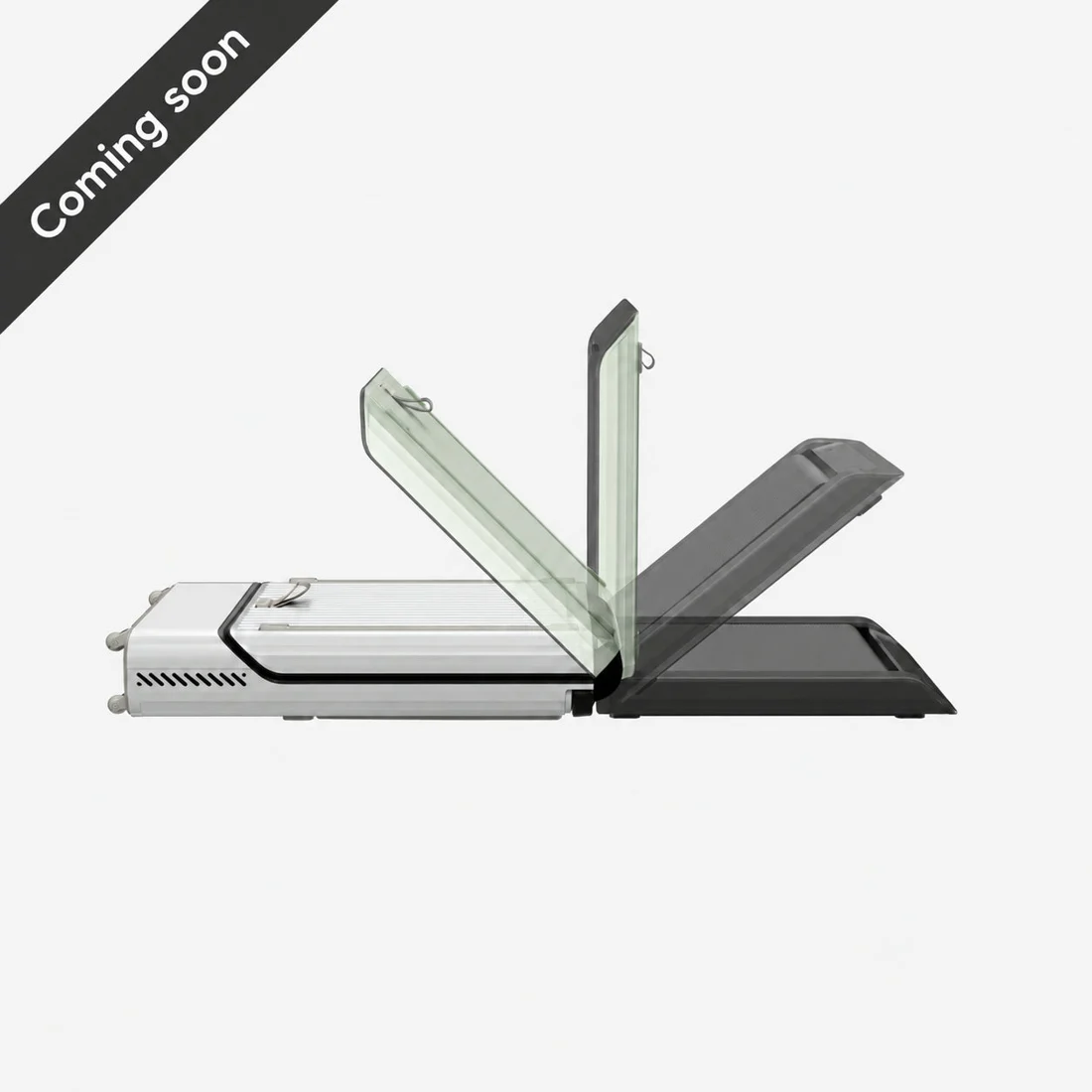
Explore this need in the finder →The WalkingCase focuses on moving a treadmill around the home: four casters, a telescoping handle and a magnetic storage closure give it a suitcase-style approach. Its 43 lb listed weight and shorter belt make it different from the long-deck C2. The current page also contains conflicting dimension conversions, so a tight furniture fit needs confirmation before purchase.
Launch reference: The current official page includes a Coming Soon banner, launch signup and sold-out wording. We do not have a confirmed released purchase configuration, so WalkingCase is excluded from buying matches. This assessment explains the manufacturer reference while release and final specifications remain to be confirmed.
Mobility is the distinctive feature
WalkingPad describes four multidirectional casters and a telescoping handle for moving the folded machine. That can be useful when the desk and storage place are in the same room, with enough clear floor for rolling. It does not remove the challenge of a stair move, a tall threshold or a tight furniture corner. Picture the real route instead of treating the suitcase comparison as a lifting promise.
The manufacturer's 43 lb net weight is lower than the listed C2, Z1 or A1 Pro weights. It is still substantial. Decide how often you must lift rather than roll it, and whether its folded closure can be checked easily before each move. The page describes a magnetic lock; follow the supplied storage instructions rather than inventing a position from a lifestyle photograph.
The shorter belt is a separate compromise
The documented walking area is 35.4 by 15 inches. That is shorter and slightly narrower than the C2's current walking area. A more portable machine can therefore be a less suitable choice if a long usable belt is essential to you. Your height alone does not establish a comfortable stride on a short deck, particularly when switching between desk tasks and brisk walking.
The table states a 242 lb capacity and a 1–4 mph speed range. Neither suitcase-style mobility nor a higher motor label raises that limit. If you need a 300 lb load option or an essential starting speed below 1 mph, compare the selected A1 Pro configuration. If the 35.4 inch belt itself is too short for your requirement, choose another model before focusing on storage.
Read exact dimensions as unresolved
The US page prints folded and unfolded inch measurements beside millimeter measurements that do not convert to those figures. It also retains a C2 FAQ below the WalkingCase table. Those details make it inappropriate to treat every number on the page as a clean, fully bridged specification for this new model.
We keep the documented folding capability, belt area and unit weight, but do not use the conflicting body dimensions to satisfy an essential maximum-length, width or folded-height answer. Request the WalkingCase's confirmed measurements in your intended storage position from the manufacturer. A few inches can determine whether an under-bed space works, so guessing from the C2 or a shipping box would undermine the reason to buy a compact machine.
Automatic pace has its own limit
The page lists remote, KS Fit app and FootSense control. Its FootSense description specifically says stepping forward can increase speed up to 3 mph. The broader technical table gives 4 mph overall. Our matching plans preserve that distinction: manual control is the documented route to the full listed range, while the automatic position-responsive plan is capped at the stated 3 mph.
This matters if automatic control and a high walking pace are both essential. They must fit the same supported plan. Learn the response before using it while typing, and keep a direct stop method in reach. A display and app tracking can help monitor a session, but they cannot establish walking comfort or safe multitasking for a particular person.
Who should investigate it?
The WalkingCase is most relevant when moving and storing the machine is a recurring obstacle, you accept the shorter belt and the required dimensions can be confirmed. The current reference includes launch and sold-out wording, so check actual order availability separately. We do not promise a shipping date from a product listing.
The C2 offers a longer belt with confirmed body measurements. The P1 provides a slower documented start and a remote display, with greater listed weight. A short Egofit model offers a different nonfolding arrangement and fixed slope. These alternatives clarify whether portability, belt length or pace control really drives the choice. This is a researched assessment without hands-on mobility, sound or durability testing.
Source: WalkingCase US product description and technical table.
Key details at a glance
| Walking deck folds | Yes |
|---|---|
| Handrail supplied | No |
| Load configuration | 242 lb stated maximum |
| Usable belt length | 35.4 in |
| Usable belt width | 15 in |
| Stated machine weight | 43 lb |
| Walking speed arrangement | FootSense capped at 3 mph; manual table up to 4 mph. |
| Incline mechanism | No incline mechanism claimed in this assessment |
| Storage routine | Folding capability confirmed; precise folded envelope unresolved. |
Use the exact model’s instructions for operating limits, supplied equipment and version differences.
Sources for this assessment
Find a walking pad for your real workspace.
Start with the load allowance, usable belt and storage routine, then add essential controls.