
Your needs, this model
Does it fit your priorities?
Can it meet a 230 lb desk-walking requirement?
Yes, within the stated 242 lb ceiling.
Explore this need in the finder →Can I require a folding deck no taller than 5.4 inches?
The product table gives 5.4 inches folded; collection packaging figures are not used.
Explore this need in the finder →Can I choose a supplied remote?
Yes. Remote control is documented.
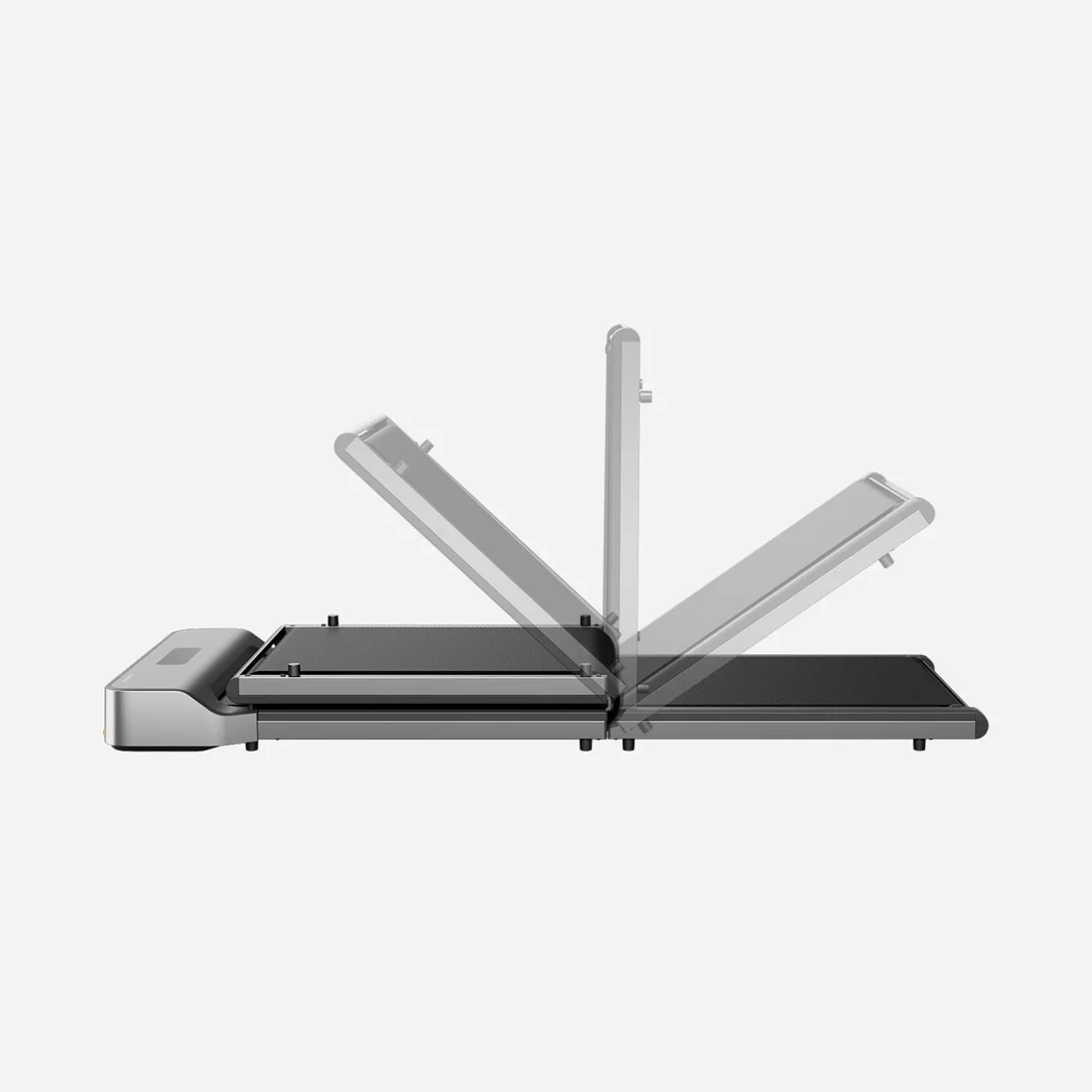
Explore this need in the finder →The WalkingPad Z1 is a folding walking pad for a desk that also has to accommodate a chair. Its 242 lb stated limit sits between the 220 lb C2 and the selected 300 lb A1 Pro. That middle position is useful, but the Z1 needs its own storage measurements and control expectations rather than being treated as a smaller C2.
Start with the walking job
The current US collection describes the Z1 as a 1–4 mph walking model with a 47.6 by 15.7 inch belt. A long open deck and a half-fold storage arrangement can suit someone who wants walking space during work and less length when finished. The 242 lb capacity is a real selection boundary. Do not substitute the higher rating of another WalkingPad model or a similarly named handrail version.
For a person whose essential starting pace is below 1 mph, the Z1 is not the obvious match on these current specifications. The P1 and A1 Pro offer lower published starting speeds. Conversely, a buyer who is comfortable with a 1 mph minimum should give more attention to belt fit, the room layout and how often the machine must be moved.
A slim open profile can hide a taller folded package
The current product's technical table gives an open size of 56.1 by 22 by 4.1 inches and a folded size of 31.8 by 22 by 5.4 inches. A manufacturer comparison elsewhere uses the larger shipping-package measurements in its folded-size row, so the product table is the reference here. The folded machine is shorter but taller than its open profile. Compare all three measurements with the exact storage opening.
The stated net weight is 51 lb. That is less than the listed A1 Pro weight, but still a substantial object to maneuver around a home office. Wheels help on the route they can actually roll; tight turns, thick rugs and steps deserve separate consideration. A floor plan that lets you roll straight from the desk to storage is more useful than an appealing folded photograph.
Remote control is the straightforward starting point
The current comparison lists app and remote speed adjustment. It does not list FootSense for the Z1 as it does for the C2 and A1 Pro. If position-responsive speed is essential, this is a reason to investigate another configuration. If you prefer deliberately selecting a pace, the supplied remote may already match the interaction you want.
WalkingPad also lists app connections, including an optional paid Kinomap experience. App availability should be assessed separately from the basic walking task. A subscription is not a physical improvement to the belt or a substitute for desk clearance. Before buying for a particular app feature, verify its current compatibility and terms on the phone you intend to use.
Distinguish the Z1 from the Z1R
A separate Z1R listing adds a removable handrail. That supplied capability deserves its own assessment. The ordinary Z1 reviewed here is the rail-free configuration. A rail can change access, storage dimensions and the way the treadmill fits beneath a desktop, so do not use a Z1R photograph as evidence of an included accessory for this model.
The white Z1 is also listed separately by the manufacturer. Finish pages can be compared within one review when the operating specifications agree, but the product label still controls the unit you receive. Check capacity, speed and folded measurements in the actual listing. Choosing a color should come after those checks, especially when retailers retain older product descriptions.
A useful shortlist position
Consider the Z1 when the stated capacity is enough, remote-controlled walking fits your routine and its folded package fits a real storage space. Compare the C2 if a narrower folded body and FootSense are more valuable to you than the Z1's different weight and capacity. Compare the A1 Pro when a lower starting speed or higher selected load matters. Compare a short Egofit model when the open room length is the limiting dimension, remembering that its belt and incline create a different compromise.
None of those comparisons establishes which machine feels quieter or more comfortable. We have not measured either. The Z1's useful advantage is the documented combination of capacity, folding and body dimensions; its limitations are easiest to spot when you measure the complete setup.
Sources: WalkingPad Z1 US listing; manufacturer model comparison.
Key details at a glance
| Walking deck folds | Yes |
|---|---|
| Handrail supplied | No |
| Load configuration | 242 lb stated maximum |
| Usable belt length | 47.6 in |
| Usable belt width | 15.7 in |
| Stated machine weight | 51 lb |
| Confirmed folded length | 31.8 in |
| Confirmed folded width | 22 in |
| Confirmed folded height | 5.4 in |
| Walking speed arrangement | 1–4 mph conservative walking reference |
| Incline mechanism | No incline mechanism claimed in this assessment |
| Storage routine | Half-fold deck; measure the machine and its access route. |
Use the exact model’s instructions for operating limits, supplied equipment and version differences.
Sources for this assessment
Find a walking pad for your real workspace.
Start with the load allowance, usable belt and storage routine, then add essential controls.