
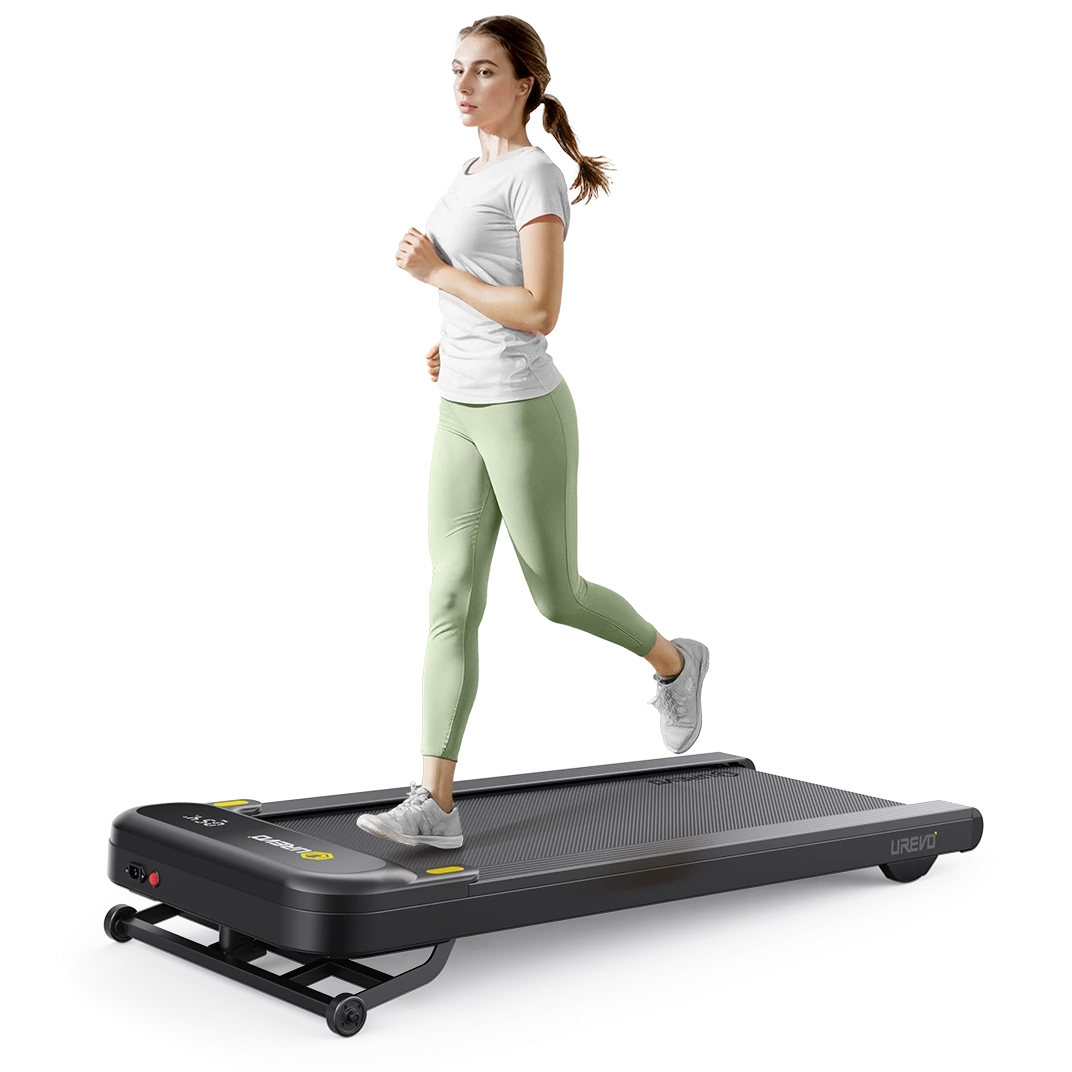
Your needs, this model
Does it fit your priorities?
Can it provide a 42-inch belt at least 16.5 inches wide?
The published walking area is 42.5 by 16.54 inches.
Explore this need in the finder →Can I start slowly with power incline and remote control?
The remote plan begins at 0.6 mph with 0–9% automatic incline.
Explore this need in the finder →Can it fit a 57-pound handling allowance?
The current table lists 56.65 pounds.
Explore this need in the finder →UREVO SpaceWalk 3S: prioritize walking-room dimensions over a higher load headline
The SpaceWalk 3S is worth considering when belt room is the part of a walking-pad comparison that matters most. Its published walking surface is longer and wider than the SpaceWalk 5L's, although the 3S has a lower user-weight limit and a larger outer footprint. That combination is a useful reminder that a newer-sounding model name or a larger load figure does not settle the whole buying decision. Choose the dimensions that fit both your stride and the room.
The belt and the body tell different stories
UREVO lists a 42.5 by 16.54-inch walking area and a 51.6 by 22.1-inch body. The first pair helps assess where your feet will land; the second helps assess what fits between the desk legs. Marking the outer footprint on the floor can reveal a conflict with a doorway or chair route before a machine arrives. Keep the required surrounding space separate from that footprint.
The comparison with the 5L is particularly useful. The 5L's belt is 39.4 by 15.8 inches, inside a narrower, shorter body. Someone who tends to drift sideways or wants more length for a natural walking stride may value the 3S's additional belt room. Someone with a tight desk opening may reach the opposite conclusion. Neither conclusion should be based solely on the area occupied by the outer frame.
Capacity is a separate requirement
The 3S has a stated 265-pound maximum load. That limit should be checked before weighing the benefits of its wider belt or automatic incline. It is not the 400-pound rating shown for the current 5L and some CyberPad configurations. Shared app features and a similar-looking control arrangement do not transfer a different model's load rating to this machine.
Its published machine weight is 56.65 pounds. Consider who will move it and what the route involves. Front wheels and a moving handle help with repositioning, but a staircase or high threshold creates a lifting task. A machine can be compact relative to a full-size treadmill while still being awkward to carry out of a small room each evening.
Use incline with attention to the task
The listed range is 0.6–4.0 mph, with nine automatic incline levels across 0–9%. Power adjustment provides variety without manually changing support feet. The upper range is most useful during a deliberate walking break, when you can focus on posture and where your feet are landing. Start a desk routine with a setting that leaves enough attention for the work itself.
UREVO describes connected SmartCoach functions that can change speed and incline during supported sessions. That is a different routine from holding a predictable pace while editing a document. Learn the app's workout functions away from concentration-heavy work and keep the supplied remote accessible. An automatic training feature should not surprise you halfway through a call.
Storage and care need an actual location
The manufacturer's body-height figure is 6.5 inches. A bed or sofa opening needs enough additional clearance for a safe approach, internal braces and any fabric hanging below the furniture. Do not assume that a pad can fold shorter or stand vertically because another UREVO model can. Confirm the storage orientation in the exact instructions and leave enough room to protect the cord when moving it.
The listed box supplies the remote, adjustment tool, lubricant, cord and manual; a handrail offered as an add-on is separate. Follow the specified belt-care and electrical instructions, and keep the machine level and its airflow path clear. The 3S makes sense when the longer, wider walking area earns its larger footprint and its 265-pound rating fits the user.
The 5L is narrower and lighter, with a shorter belt and a higher manual load limit. The Strol 2S Pro adds an upright handrail and exercise arrangement when those capabilities justify more weight and storage length.
Key details at a glance
| Handrail supplied | No |
|---|---|
| Load configuration | US manual specification agrees with 265 lb table; manual prohibits vertical/side storage. |
| Usable belt length | 42.5 in |
| Usable belt width | 16.54 in |
| Stated machine weight | 56.65 lb |
| Walking speed arrangement | 0.6–4.0 mph published walking range |
| Incline mechanism | 0–9% automatic incline |
| Storage routine | Linked manual prohibits standing-up and side-standing storage; retain a flat storage space. |
Use the exact model’s instructions for operating limits, supplied equipment and version differences.
Sources for this assessment
Find a walking pad for your real workspace.
Start with the load allowance, usable belt and storage routine, then add essential controls.